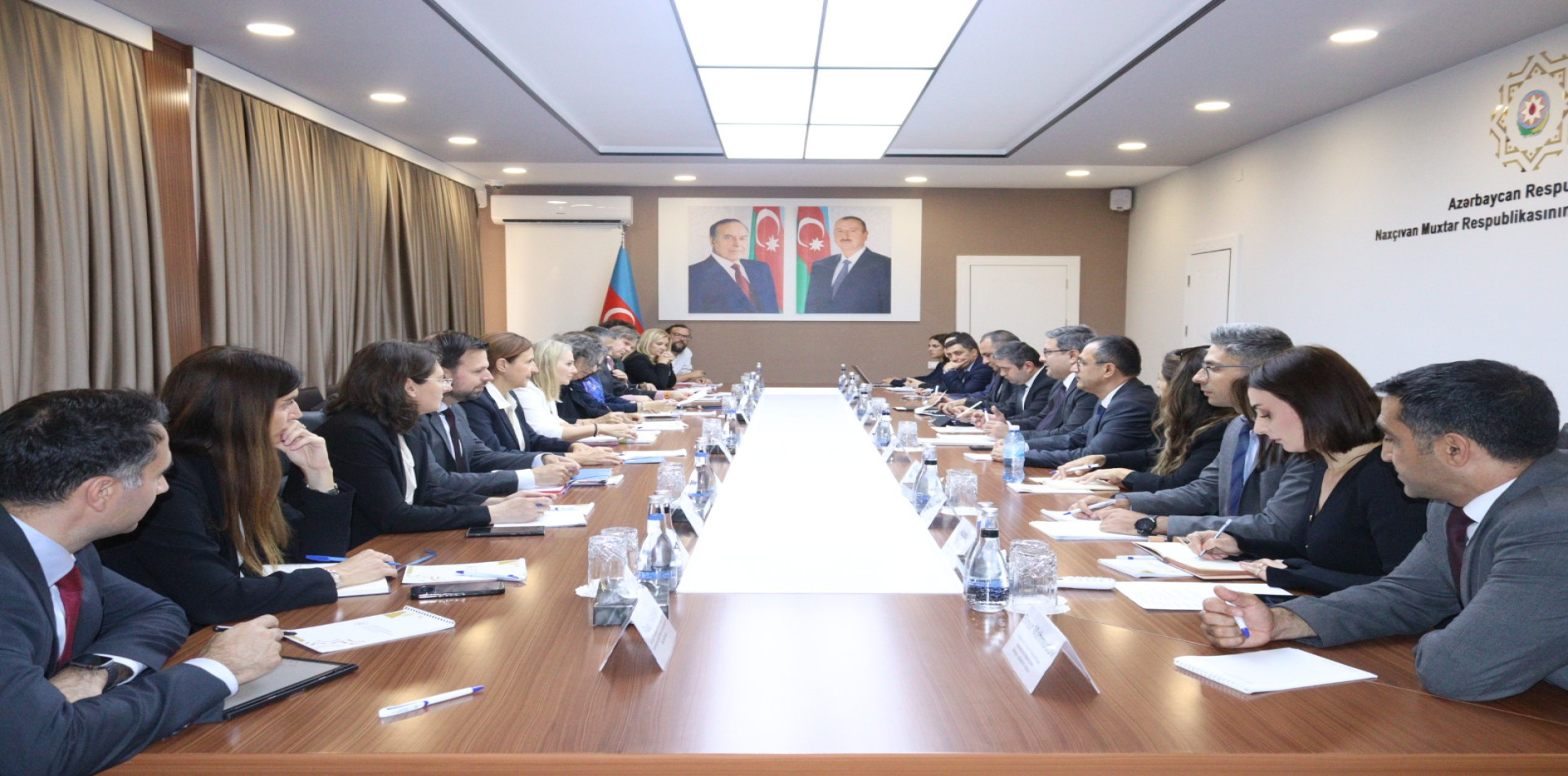
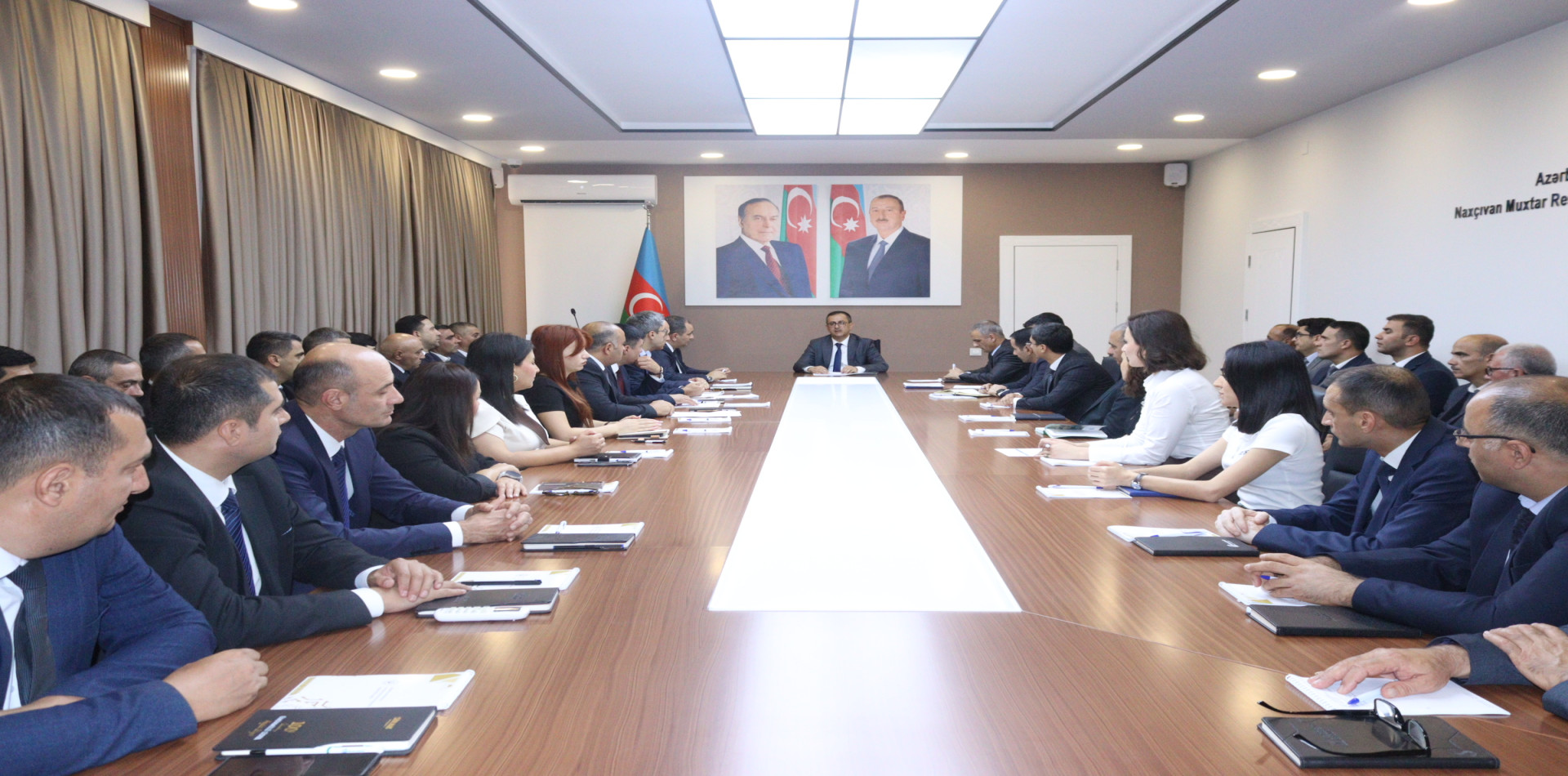
On February 6, an event titled “The Economic Potential of the Nakhchivan Autonomous Republic, Tax, Customs, and Social Insurance Incentives” was held in Baku. The main purpose of the event was to provide entrepreneurs with detailed information about the tax, customs, and social insurance incentives applied in the Nakhchivan Autonomous Republic as of January 1, 2026, to promote the region’s investment opportunities, and to encourage business activity.
At the event, Deputy Minister of Economy Azer Bayramov spoke about the socio-economic reforms being implemented in the country. He noted that the average annual growth rate for 2022–2025 exceeded the 5% target set in the Socio-Economic Development Strategy, reaching 5.6%. In recent years, as a result of the development of the non-oil sector and tax reforms, the country’s fiscal sustainability has strengthened, and strategic foreign exchange reserves have exceeded USD 85 billion. The Deputy Minister emphasized that the significant achievements of the Head of State in the international arena and the full restoration of sovereignty have created new opportunities and challenges for the country’s economic development. In this context, the realization of the Zangezur Corridor will open up special opportunities for the Nakhchivan Autonomous Republic. Recent socio-economic indicators demonstrate an increase in the economic activity of the autonomous republic. In order to further strengthen state support for entrepreneurs, tax incentives have also begun to be applied in Nakhchivan for a period of 10 years. The favorable conditions created will contribute to the realization of Nakhchivan’s economic potential and to improvements in social welfare.
The Minister of Economy of the Nakhchivan Autonomous Republic, Kazim Huseynaliyev, drew attention to the socio-economic results achieved by Nakhchivan in recent years and the region’s strategic advantages. He noted that the planned industrial park, the operation of the existing industrial quarter, the expansion of production and logistics capabilities, as well as the presence of a land border with Turkey, are turning Nakhchivan into an important economic hub with access to regional and international markets. The Minister also provided information on the work being carried out to further improve the business environment, promote investments, and strengthen public-private sector cooperation.
Speaking at the event, Deputy Head of the State Tax Service under the Ministry of Economy, Emil Garayev, stated that the economic potential of the Nakhchivan Autonomous Republic has increased and that the business environment in the region has significantly improved in recent years. He noted that in 2025, tax revenues to the budget in the autonomous republic exceeded 260 million manats, with more than 70% of these revenues coming from the non-state sector.
The Deputy Head of the Service emphasized that the tax incentives applied in the Nakhchivan Autonomous Republic for a period of 10 years starting from 2026 cover profit and income tax, property and land tax, simplified tax, dividend income, as well as value-added tax on imports. He stated that these incentives serve to stimulate investment in the region.
At the event, heads of entrepreneurs’ public associations also delivered speeches. Subsequently, presentations were held on the tax, customs, and social insurance incentives applied in the Nakhchivan Autonomous Republic from 2026, as well as on the autonomous republic’s economic potential and support mechanisms for entrepreneurs.
Within the framework of the event, questions of interest to entrepreneurs were answered by representatives of government institutions.